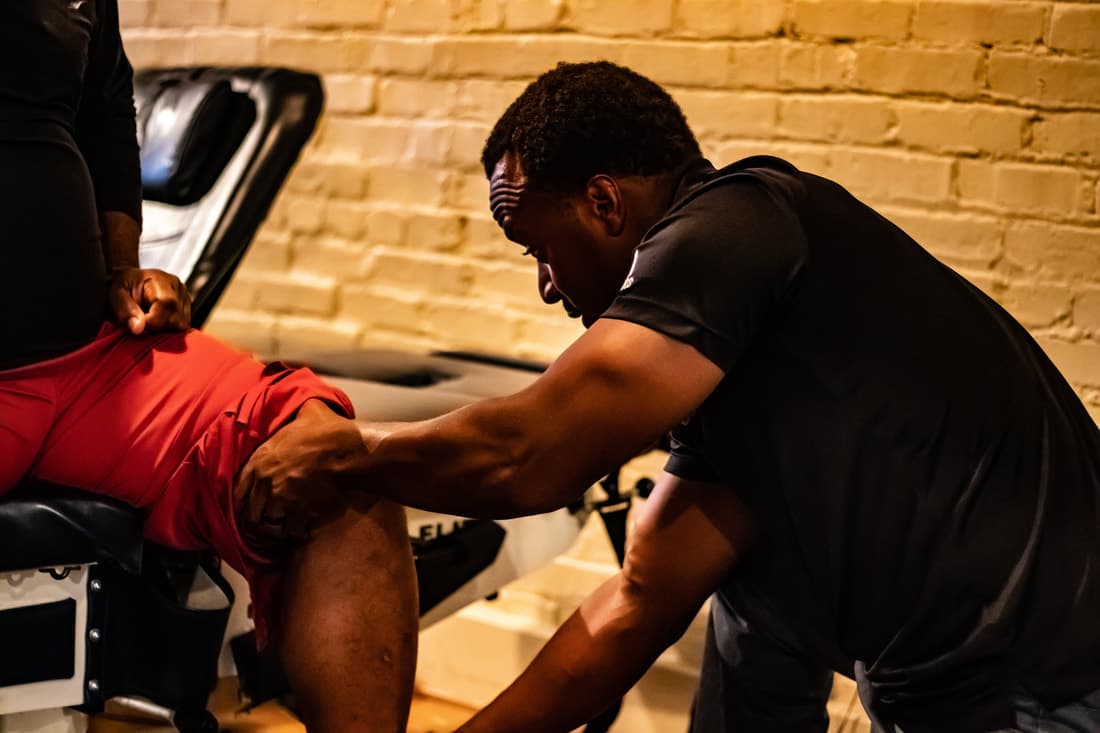
If you have ever had a chiropractic adjustment, you have probably heard it: that distinctive pop or crack as a joint moves. For many first-time patients the sound is startling, and some wonder whether something broke. Others find it oddly satisfying, as if something was “released.”
That popping sound is a normal part of joint movement, and it is not your bones cracking. Understanding what causes it can ease any anxiety during treatment. Here is the science behind that familiar pop and what it does, and does not, mean.
The Science Behind the Pop: Cavitation Explained
The sound is linked to a process called cavitation. Your joints are surrounded by synovial fluid, a lubricant that helps the joint surfaces glide. This fluid contains dissolved gases, including oxygen, nitrogen, and carbon dioxide.
When a chiropractor applies a quick, controlled movement to a joint, sometimes described as a high-velocity, low-amplitude thrust, the joint surfaces separate slightly and the pressure in the fluid drops. Dissolved gas comes out of solution and forms a bubble, a bit like opening a carbonated drink.
Researchers have filmed this process with real-time MRI and linked the sound to the formation of a gas cavity inside the joint. Scientists still debate exactly which part of the process makes the noise. Either way, the sound itself is harmless.
Does the Pop Mean the Adjustment Worked?
Many people associate the pop with a successful adjustment. The sound can be satisfying, but whether you hear it or not does not determine whether the treatment helped.
A skilled chiropractor focuses on improving joint motion, easing muscle tension, and improving function, not on producing a sound. Some joints release gas more readily than others, and individual anatomy plays a role in whether you hear anything.
Some approaches are gentle by design and make no sound at all. The more useful measure is how you move and feel over the following days and weeks. For more on what adjustments do, read the science behind spinal adjustments.
Is It Safe?
This is one of the most common questions patients ask. When performed by a licensed, trained practitioner after proper screening, spinal manipulation is generally considered safe for most people.
Serious complications are rare. Mild, temporary side effects are more common, such as soreness or stiffness in the treated area, similar to what you might feel after exercise. These are usually short-lived.
Your practitioner should take a thorough history and examine you before any adjustment to check for reasons to modify or avoid it. Conditions such as severe osteoporosis, spinal infection, or a fracture call for a different approach. Always share your full health history and any concerns.
Why Some Joints Pop More Than Others
You may notice that some joints pop louder or more often than others. That variation is normal and depends on several factors:
- Joint structure: the shape and size of each joint affect how easily a gas bubble forms and how loud it sounds.
- Joint stiffness: a joint that has been stiff for a while may make a more noticeable sound when it is first moved.
- Individual variation: everyone is different. Some people's joints pop easily, while others rarely make any sound.
- Timing: after a joint pops, it usually cannot pop again right away. The gas takes time to dissolve back into the fluid, which is why you cannot crack the same knuckle twice in a row.
What About Self-Cracking?
Many people habitually crack their own knuckles, neck, or back, looking for the same release they feel during an adjustment. Occasional self-cracking is generally not harmful, but there are important differences between that and professional care.
When you crack your own joints, you tend to move the segments that already move easily. The stiff joints that may be driving your discomfort often stay stiff, and the relief tends to be short-lived.
A chiropractor examines first, then applies a controlled movement to the specific joint that needs it. If you constantly feel the need to crack your own joints, it may be a sign that an underlying restriction deserves attention. Read the truth about cracking your own back and neck.
When to Seek Professional Care
A pop during an adjustment is normal. These symptoms, however, deserve prompt attention:
- A pop followed by sharp, severe pain
- Sudden loss of movement or function after a pop
- Numbness, tingling, or weakness in your arms or legs
- Swelling, redness, or warmth around a joint
- Persistent pain that does not improve with rest
If you notice any of these, contact a healthcare provider promptly. Sudden, severe neck pain with dizziness, vision changes, or trouble speaking needs emergency care right away.
Moving Forward with Confidence
Knowing the science behind the pop can make chiropractic care feel less mysterious. The sound is a harmless byproduct of joint movement, not the goal of treatment.
Whether or not your adjustments come with an audible pop, what matters is how you move and function. If you are dealing with joint pain, stiffness, or limited range of motion, an evaluation can look for the cause and help build a plan suited to you. Here is what to expect during your first chiropractic visit.
At KC Wellness and Physiotherapy in Kansas City, Dr. Kowin Casey, DC, a chiropractic physician, provides chiropractic and spinal corrective care. If you have questions before your first adjustment, call our office at (913) 424-2410.