
Kinesio Taping in Kansas City
We offer therapeutic tape for all parts of the body, including the knee, back, shoulder, foot and neck. Dr. Kowin Casey uses kinesio taping as part of your care plan to support injured areas without restricting your motion.
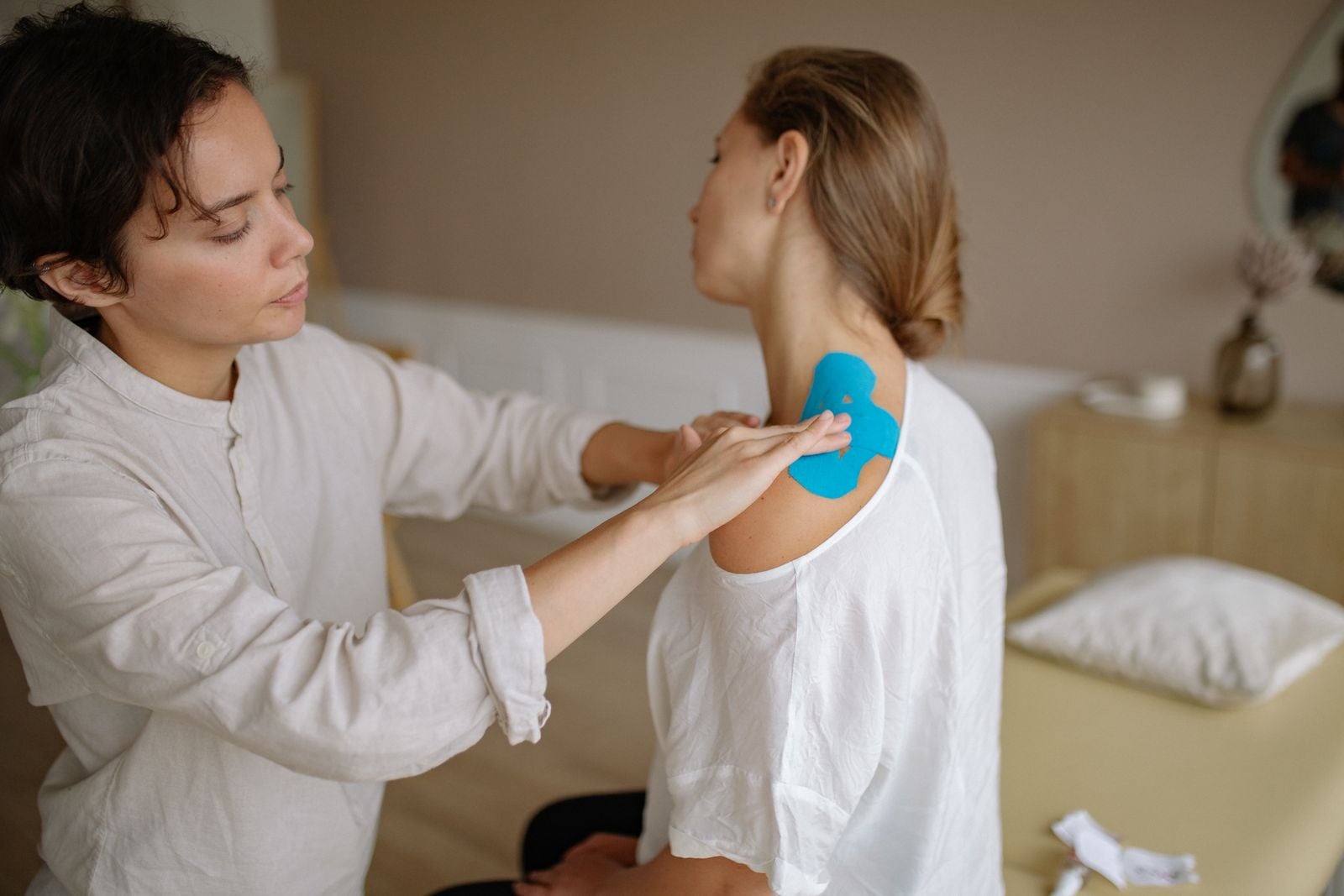
What Is Kinesio Taping?
Kinesio taping uses a thin, stretchy therapeutic tape that is applied directly to the skin over muscles and joints. Unlike rigid athletic tape, which is designed to limit movement, kinesiology tape stretches with the body, so it can offer support while you keep moving through your day, your workout, or your sport.
At KC Wellness and Physiotherapy, we offer therapeutic tape for all parts of the body, including the knee, back, shoulder, foot and neck. Our therapeutic tape is designed to be gentle on sensitive skin and is easily applied and removed.
Kinesiology tape benefits may include relief of pain, swelling and bruising, faster recovery after exercise, and support for injuries without restricting motion. Taping is usually one part of a broader plan, used alongside chiropractic care, physiotherapy, Active Release Technique, and exercise rather than on its own.
When Kinesio Taping May Be Worth Asking About
- Knee pain or a feeling of instability while walking, running, or playing sports
- Low back or mid back discomfort that flares with activity or long days
- Shoulder soreness or strain from lifting, throwing, or overhead work
- Foot and arch discomfort, such as heel pain linked to plantar fasciitis
- Neck and upper back tension from posture, desk work, or strain
- Swelling or bruising after a sprain, strain, or minor sports injury
- Muscle soreness as you return to training after exercise or injury
- Wanting support for an injured area without giving up your range of motion
What to Expect
- A conversation with Dr. Casey about where it hurts, what makes it worse, and the activities you want to get back to
- An evaluation of the area before any tape is applied, so taping fits your overall care plan
- Tape applied to clean, dry skin in a pattern chosen for the area being supported
- Clear instructions on wearing the tape, caring for it, and removing it gently
- Taping combined with other care, such as adjustments, physiotherapy, or exercises, when appropriate
Our Approach to Kinesio Taping
Evaluation by Dr. Casey
Before taping, Dr. Casey reviews your history, asks how the injury happened, and examines how the area moves. This helps him decide whether tape is a good fit and which area needs support, whether that is a knee, shoulder, foot, back, or neck.
A Personalized Taping Plan
Tape is applied for your body and your activity, not from a one-size-fits-all template. Depending on your needs, taping may be paired with chiropractic care, physiotherapy, Active Release Technique, or home exercises so the tape supports the rest of your plan.
Ongoing Support and Education
We explain how to care for the tape, what to watch for on your skin, and how to take it off gently. At follow-up visits, Dr. Casey checks your progress and adjusts or stops taping as your recovery moves forward.
Benefits
Support Without Restricting Motion
Kinesiology tape is designed to stretch with your body, so it can support an injured area while you keep moving.
May Help Relieve Pain
Relief of pain is one of the main reasons tape is used, and it can make daily activity and exercise feel more manageable. Results vary from person to person.
Swelling and Bruising
Kinesiology tape may help with swelling and bruising after strains, sprains, and minor injuries. Results vary.
Recovery After Exercise
Kinesiology tape may support faster recovery after exercise, which is one reason it is popular with athletes and active people.
Gentle on Skin
Our therapeutic tape is designed to be gentle on sensitive skin and is easily applied and removed.
Works With the Rest of Your Care
Taping can complement hands-on treatment and exercise and may help you stay active between visits.
Your Taping Visit, Step by Step
Evaluation
Dr. Casey reviews your history and examines the area to see how it moves and where support is needed.
Application
The skin is cleaned and dried, and tape strips are chosen and applied to support the area. The tape is designed to feel light and flexible once it is on.
Wear and Home Care
You leave with instructions for wearing the tape, caring for it during daily activity, and removing it gently. If the skin under the tape itches, burns, or becomes irritated, remove it and call our office.
Follow-Up
At your next visit, Dr. Casey checks your progress and decides whether to continue, change, or stop taping as part of your plan.
When Taping May Not Be Appropriate
Kinesiology tape should not be placed over open wounds, broken or irritated skin, or areas of skin infection.
Tell Dr. Casey before taping if you have a known allergy to adhesives, fragile skin, reduced sensation, circulation problems, or a history of blood clots, so he can decide whether taping is right for you.

About the practice
KC Wellness and Physiotherapy was founded by Dr. Kowin Casey, DC, a chiropractic physician who received a certification in physiotherapy with an emphasis in sports rehabilitation.
Common Questions About Kinesio Taping
Does kinesio taping hurt?
Applying kinesiology tape is generally not painful. The tape is thin and flexible. Our therapeutic tape is designed to be gentle on sensitive skin and is easily applied and removed. Removal can pull slightly on the skin, so we will show you how to take it off gently. If you have a known allergy to adhesives or fragile skin, tell Dr. Casey before taping.
What parts of the body can be taped?
We offer therapeutic tape for all parts of the body, including the knee, back, shoulder, foot and neck. Dr. Casey chooses where and how to apply it based on your evaluation.
Can I shower or exercise with the tape on?
Kinesiology tape is generally designed to be worn during everyday activity and exercise, and many types tolerate showering. Pat the tape dry afterward rather than rubbing it. Dr. Casey will give you specific instructions for the tape you receive.
Is kinesio taping a treatment on its own?
Taping is usually one part of a broader plan. It is often combined with chiropractic care, physiotherapy, Active Release Technique, and exercises that address the underlying problem while the tape provides support.
Do you accept insurance?
We accept all major insurance plans. Call our office at (913) 424-2410 to confirm your coverage before your visit.
Related Services
Related Service
Sports Injury Care & Team Physicals
Care for sports related injuries, plus sports and team physicals, from a doctor who lettered in football and track as an NCAA athlete.
Related Service
Active Release Technique & Myofascial Release
Hands-on soft tissue techniques for tight, overworked muscles, which can be combined with taping in your plan.
Related Condition
Sports Injuries
Learn about common sports injuries and the conservative care options that can help you return to activity.
See Whether Kinesio Taping Fits Your Care
Request an appointment online or call our office at (913) 424-2410 to schedule a visit with Dr. Casey at 1815 Grand Blvd. in Kansas City.