
Non-Surgical Spinal Decompression and Traction in Kansas City
Gentle, controlled traction for the neck, mid back and low back. Dr. Casey evaluates your spine first and recommends decompression only when it fits your condition and your goals.
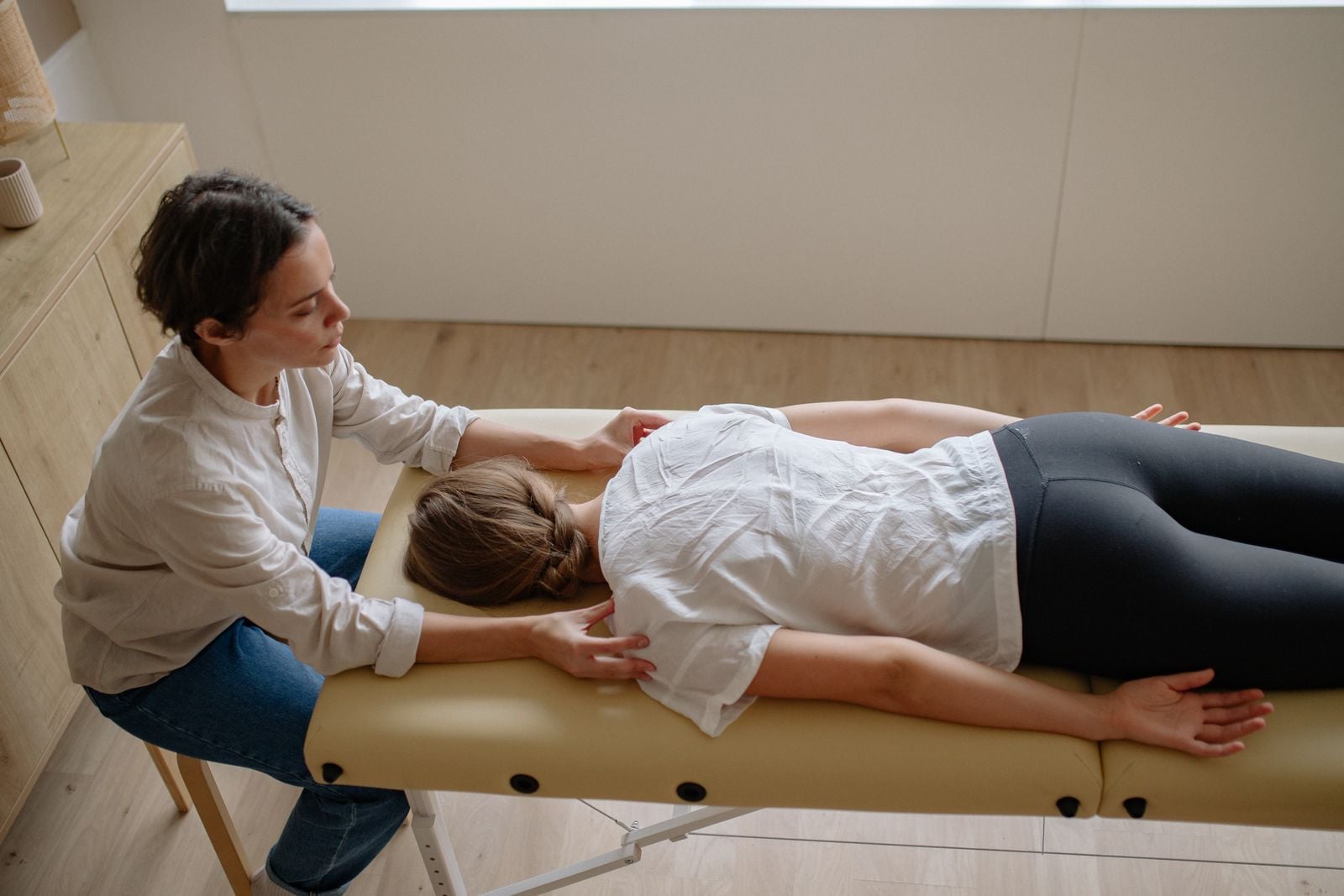
What Is Non-Surgical Spinal Decompression?
Non-surgical spinal decompression is a form of traction therapy. A controlled, gentle pulling force is applied to the spine to create a little more space between the vertebrae. The aim is to ease pressure on the discs, joints and nerves of the spine, which may help reduce pain and give irritated tissues a better environment to settle.
KC Wellness and Physiotherapy offers non-surgical cervical, thoracic and lumbar decompression, covering the neck, the mid back and the low back, along with both manual and mechanical traction. Manual traction is applied by hand, so the angle and force can be adjusted moment to moment. Mechanical traction uses a traction table or device to deliver a steady or cycling pull that can be set and repeated consistently.
Decompression is not the right fit for every back or neck. Dr. Kowin Casey, a licensed chiropractic physician with a certification in physiotherapy and an emphasis in sports rehabilitation, evaluates you first and decides with you whether traction belongs in your plan. When it does, it can be combined with other care, such as chiropractic adjustments, therapeutic exercise and guidance on posture and daily habits, in keeping with the practice's goal of Achieving an Optimal Balance.
Signs Decompression or Traction May Be Worth Discussing
- Low back pain that has lingered or keeps returning
- Neck pain, especially with stiffness or tension that builds through the day
- Pain, tingling or numbness that travels into an arm or leg
- A diagnosis of a herniated or bulging disc
- Sciatica or other signs of an irritated spinal nerve
- Symptoms linked to spinal stenosis or age-related disc changes
- A preference to explore conservative, non-surgical care first
What to Expect
- A health history and hands-on examination with Dr. Casey before any traction is used
- A clear explanation of whether decompression fits your condition, and why
- Imaging such as x-rays may be recommended or referred when it would help guide your care
- Manual traction applied by hand, or mechanical traction applied with equipment, chosen for your condition
- The pull builds gradually and should feel like a gentle stretch. Speak up at any time and the force can be reduced or stopped.
- Home exercises and posture guidance to support the work done in the office
How Dr. Casey Approaches Decompression
Evaluation by Dr. Casey
Dr. Casey reviews your history, examines how your spine moves and checks nerve function to understand what is driving your pain. He also screens for reasons traction would not be appropriate, so the decision to use it is made carefully and with you.
A Personalized Plan
If decompression fits, Dr. Casey chooses the region to treat (cervical, thoracic or lumbar) and whether manual or mechanical traction suits you best. Traction can be paired with chiropractic adjustments and therapeutic exercise, so your plan addresses more than a single symptom.
Ongoing Support and Education
Your response is rechecked as care progresses and the plan is adjusted as needed. You also learn exercises, posture habits and daily movement strategies that help protect your spine between visits.
Benefits
Non-Surgical and Drug-Free
Decompression is a conservative option. It does not involve incisions, injections or medication.
Gentle, Controlled Force
The pull is applied gradually and can be adjusted at any time, whether it is delivered by hand or with a mechanical traction device.
Neck, Mid Back and Low Back
Cervical, thoracic and lumbar decompression means the same careful approach can be applied to different regions of the spine.
May Ease Pressure on Discs and Nerves
Traction aims to gently separate the vertebrae, which may reduce pressure on irritated discs and nerve roots and may help ease pain that travels into the arms or legs.
Part of a Whole-Person Plan
Traction works alongside adjustments, exercise and lifestyle guidance, in keeping with the practice's focus on caring for the whole person.
Your Path Through Decompression Care
Evaluation and Candidacy
Dr. Casey takes your history, examines your spine and nerve function, and decides with you whether decompression or traction is appropriate. If imaging would help, he will explain why.
Starting Traction Gently
Early sessions use a conservative force so Dr. Casey can see how your body responds. The force is adjusted based on your comfort and feedback.
Building Strength and Stability
As symptoms settle, the focus shifts toward therapeutic exercise, core stability and posture, so your spine is better supported on its own.
Maintaining Your Progress
Once your goals are met, you leave with a home program and a better sense of the early warning signs, and you can check in again if symptoms return.
Cervical, Thoracic and Lumbar Decompression
Cervical decompression focuses on the neck. It may be considered for neck pain and for arm pain, tingling or numbness related to an irritated nerve in the neck.
Thoracic decompression focuses on the mid back, the region between the shoulder blades where the spine connects to the rib cage.
Lumbar decompression focuses on the low back. It is most often discussed for low back pain and for leg symptoms, such as sciatica, that stem from pressure on a spinal nerve.

About the practice
KC Wellness and Physiotherapy was founded by Dr. Kowin Casey, DC, a chiropractic physician who received a certification in physiotherapy with an emphasis in sports rehabilitation.
Common Questions About Non-Surgical Spinal Decompression & Traction
Am I a candidate for spinal decompression?
That is decided at your evaluation. Decompression is commonly considered for disc-related and nerve-related neck and back pain, but it is generally avoided with certain conditions, such as pregnancy, a recent spinal fracture, significant osteoporosis, surgical hardware in the spine, or a spinal tumor or infection. Dr. Casey reviews your history and examination findings before recommending it.
What is the difference between manual and mechanical traction?
Manual traction is applied by hand, which allows the angle and force to be adjusted moment to moment. Mechanical traction uses a traction table or device to apply a measured, repeatable pull. Both aim to gently decompress the spine, and Dr. Casey chooses the method that suits your condition and comfort.
Does spinal decompression hurt?
It should not. Most people describe a gentle stretching sensation. Mild soreness afterward can happen, much like muscles feel after a new stretch. If anything feels sharp or increases your symptoms, tell us right away and the force can be reduced or stopped.
How many sessions will I need?
It varies from person to person and depends on your condition, how long it has been present and how you respond. Dr. Casey will discuss a recommended plan after your evaluation and review it with you as you progress.
Do you accept insurance?
We accept all major insurance plans. Call our office at (913) 424-2410 to confirm your coverage before your visit.
Related Services
Condition
Herniated Disc
How a herniated disc can cause pain, and the conservative care options that may help.
Condition
Sciatica
Understand pain that travels from the low back into the leg and how it is evaluated.
Service
Chiropractic & Spinal Corrective Care
Spinal corrective care that can be paired with traction as part of a complete plan.
Find Out if Decompression Is Right for You
Book an evaluation with Dr. Casey at our Kansas City office. We will listen carefully, examine your spine and explain your options clearly, so you can decide on next steps with confidence.