Most of us have done it: twisted the spine just right to feel that pop, or tilted the neck side to side until it cracks. The quick sense of relief can feel like a mini adjustment. But is cracking your own back and neck actually safe, and is it helping or hurting you over time?
The habit is very common. Many people start as teenagers or young adults, often in response to tension or stiffness. It might feel good in the moment, but understanding what is happening inside your joints, and the possible downsides, can help you make better decisions about your spinal health.
What Is Actually Happening When You Crack Your Joints
That popping sound is not bones grinding together or something breaking. Your joints are lubricated by synovial fluid, which contains dissolved gases. When a joint is stretched past its usual position, the pressure inside the joint capsule drops quickly and a gas bubble forms, producing the familiar crack. This is called cavitation.
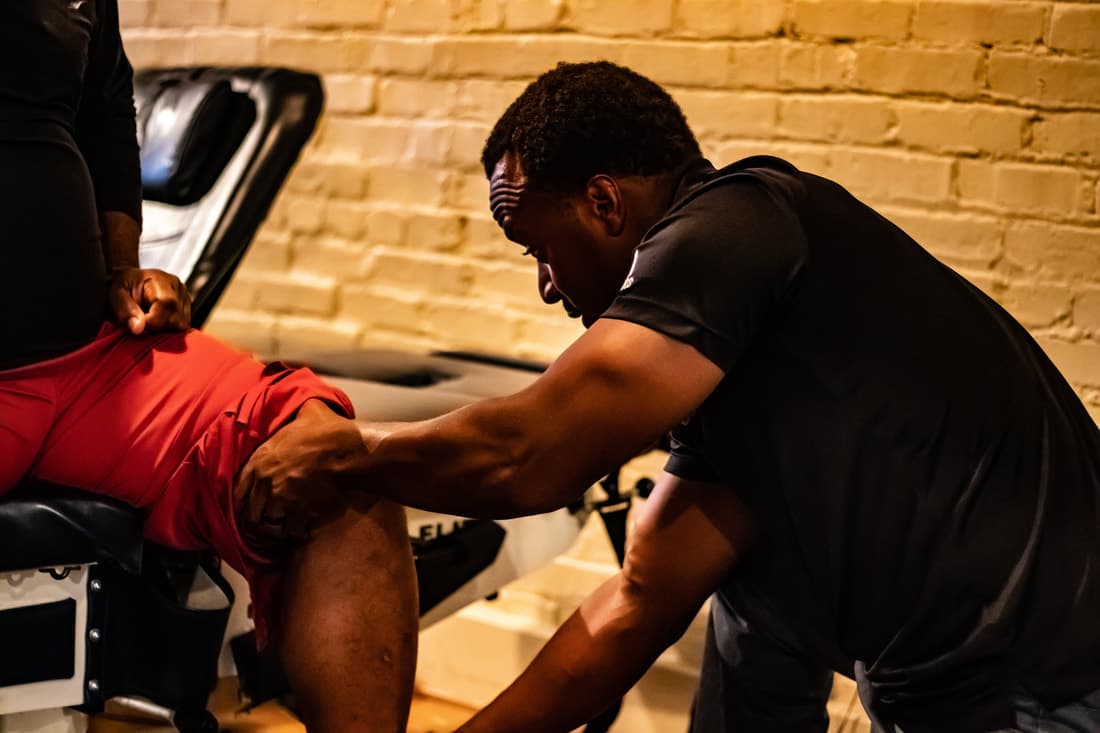
The same thing can happen during a professional chiropractic adjustment. The difference is precision: a trained chiropractor first examines which joints are stiff and which already move freely, then applies a controlled movement to a specific joint. Read more about what causes the popping sound.
The Temporary Relief Trap
Self-cracking often brings quick relief. Stretching the joint and the muscles around it can briefly ease the feeling of tightness, and the sensation itself may temporarily dampen discomfort.
That relief is usually short-lived. Tightness often returns, which creates a frustrating cycle: you feel stiff, you crack, you feel better for a while, the stiffness returns, and you crack again.
The Possible Downsides of a Constant Habit
An occasional self-crack is unlikely to cause serious harm in a healthy person. Making it a constant habit is a different story:
- Irritating joints that already move freely: repeatedly forcing the same joints, especially with increasing force, may irritate them and the tissues that stabilize them.
- Ongoing muscle guarding: if the underlying stiffness or weakness is never addressed, the surrounding muscles can stay tense as they try to stabilize the area.
- Missing the underlying problem: a constant urge to crack may point to posture habits, muscle imbalance, or stiffness elsewhere that self-manipulation will not fix.
- Risk of injury, especially in the neck: forceful or jerky neck twisting carries a small but real risk of injuring the muscles, joints, nerves, or blood vessels that pass through the neck.
When to Be Especially Cautious
Some people should avoid self-cracking altogether or be especially careful:
- People with osteoporosis or decreased bone density
- Anyone with a history of spinal injury or surgery
- People with inflammatory arthritis, such as rheumatoid arthritis or ankylosing spondylitis
- Anyone with numbness, tingling, or weakness in the arms or legs
- People taking blood thinners or who have clotting disorders
- Anyone with dizziness, headaches, or vision changes linked to neck movement
If any of these apply to you and you crack your own joints regularly, talk with a healthcare provider who can assess your individual risk. Sudden, severe neck pain with dizziness, trouble speaking, vision changes, or weakness needs emergency care right away.
What a Professional Evaluation Offers Instead
A professional chiropractic visit differs from self-cracking in several important ways:
- A diagnosis first: an exam looks at which joints are stiff and which already move freely, so treatment targets the right areas.
- Specific, controlled force: an adjustment is directed at a specific joint, rather than the general twisting you can do on your own.
- Treatment beyond the joint: care can include soft tissue work, stretching, strengthening, and posture guidance to address why the stiffness keeps coming back.
- Screening for safety: a provider reviews your history for reasons to modify or avoid manipulation.
At KC Wellness and Physiotherapy, Dr. Kowin Casey, DC, combines chiropractic and spinal corrective care with physiotherapy and rehabilitation exercises and soft tissue work such as Active Release Technique and myofascial release.
Better Alternatives to Self-Cracking
If you feel the urge to crack your back or neck, try these gentler options first:
- Gentle stretching: regular stretches for your neck, shoulders, and back can ease tension without forcing the joints.
- Foam rolling: a foam roller on the upper back can loosen tight muscles without a forced twist.
- Heat or cold: heat can help tight muscles relax, and cold can calm a sore, irritated area.
- Posture and workspace changes: the urge to crack often comes from long hours in one position. These desk ergonomics tips are a good place to start.
- Movement breaks: if you sit for long periods, get up regularly to stand, walk, and move through different ranges of motion.
The Bottom Line: Listen to Your Body
If you occasionally crack your back or neck and have no ill effects, you are probably not causing serious harm. But if you feel the need to crack constantly, if the relief keeps getting shorter, or if you need more force to get the same effect, something deeper likely needs attention.
A constant urge to self-manipulate is often a sign that something is not working as well as it could. Rather than repeating a cycle that may not solve the problem, consider an evaluation that looks for the cause.
Professional care can help break the cycle by improving how stiff joints move, balancing muscle strength and flexibility, and building habits that reduce the urge to crack. If you are stuck in that cycle, or have persistent back or neck discomfort, an evaluation can identify what is driving your symptoms and build a plan to address it.
New patients can download the intake forms ahead of the first visit, or call our office at (913) 424-2410 with any questions.