The moment of impact happens in an instant. Your car jolts, your head snaps forward and back, and then it is quiet. You step out, check the damage, exchange information, and tell yourself you are fine. No broken bones, no visible injuries. Hours or days later the pain starts: a stiff neck, a throbbing headache, an ache spreading into your shoulders and upper back.
This is whiplash, one of the most common injuries from car accidents. It may seem minor at first, but for some people symptoms linger, and waiting to get checked can make recovery harder. Here is what whiplash is, why symptoms can be delayed, and why an early evaluation matters.
What Is Whiplash?
Whiplash is a soft tissue injury to the neck that happens when the head is suddenly thrown backward and then forward, or the reverse, in a rapid, whip-like motion. That abrupt movement can strain or sprain the muscles, ligaments, tendons, and joints of the neck.
Car accidents are the most common cause, but whiplash can also come from sports collisions, falls, or any trauma that whips the head in a similar way. Rear-end collisions are a classic cause, even at fairly low speeds.
Severity varies. Many people recover within weeks, while others have symptoms that last much longer. Recognizing the injury early and getting appropriate care can help.
Recognizing the Symptoms of Whiplash
Whiplash symptoms often do not appear right away. Adrenaline can mask pain, and inflammation in injured tissue takes time to build. Symptoms may appear within hours, or not until a day or more later.
Common symptoms include:
- Neck pain and stiffness: often the first and most noticeable symptom, ranging from mild discomfort to pain that limits movement. See neck pain.
- Headaches: typically starting at the base of the skull and spreading toward the forehead. See headaches and migraines.
- Shoulder and upper back pain: the injury can affect the surrounding muscles and joints.
- Reduced range of motion: difficulty turning your head or looking up and down.
- Tingling or numbness: sensations in the arms or hands can mean a nerve is involved.
- Fatigue and dizziness: part of the body's response to injury.
- Trouble concentrating: memory problems, difficulty focusing, or irritability.
If you notice any of these after a car accident, get evaluated, even if they seem mild. Severe neck pain, numbness or weakness, a severe headache, confusion, or any loss of consciousness needs emergency care right away.
The Risks of Waiting
It is tempting to wait and see. Many people assume rest alone will fix the problem, or feel too busy to deal with it.
When a neck injury is not addressed, pain can lead you to move less, and protective muscle guarding can set in. Over time, stiffness and altered movement patterns can develop as the body tries to avoid pain, which can add strain to the shoulders and upper back.
Research on whiplash-associated disorders shows that a significant number of people still have symptoms months after the injury. Early, active management is generally recommended to support recovery. Lingering whiplash can be associated with:
- Ongoing headaches: nerve irritation and muscle tension can contribute to recurring headaches.
- Persistent neck pain and stiffness: reduced motion that makes driving, working, and sleeping harder.
- Nerve irritation: numbness, tingling, or weakness in the arms. See nerve impingement.
- Sleep and mood effects: persistent pain can contribute to anxiety, low mood, and poor sleep.
Getting evaluated early, and staying appropriately active, gives you the best chance to recover well.
How Chiropractic and Rehabilitation Care Can Help
Conservative care for whiplash focuses on restoring comfortable movement, easing muscle tension, and gradually rebuilding strength. Rather than relying only on medication, it addresses how the neck and upper back are moving.
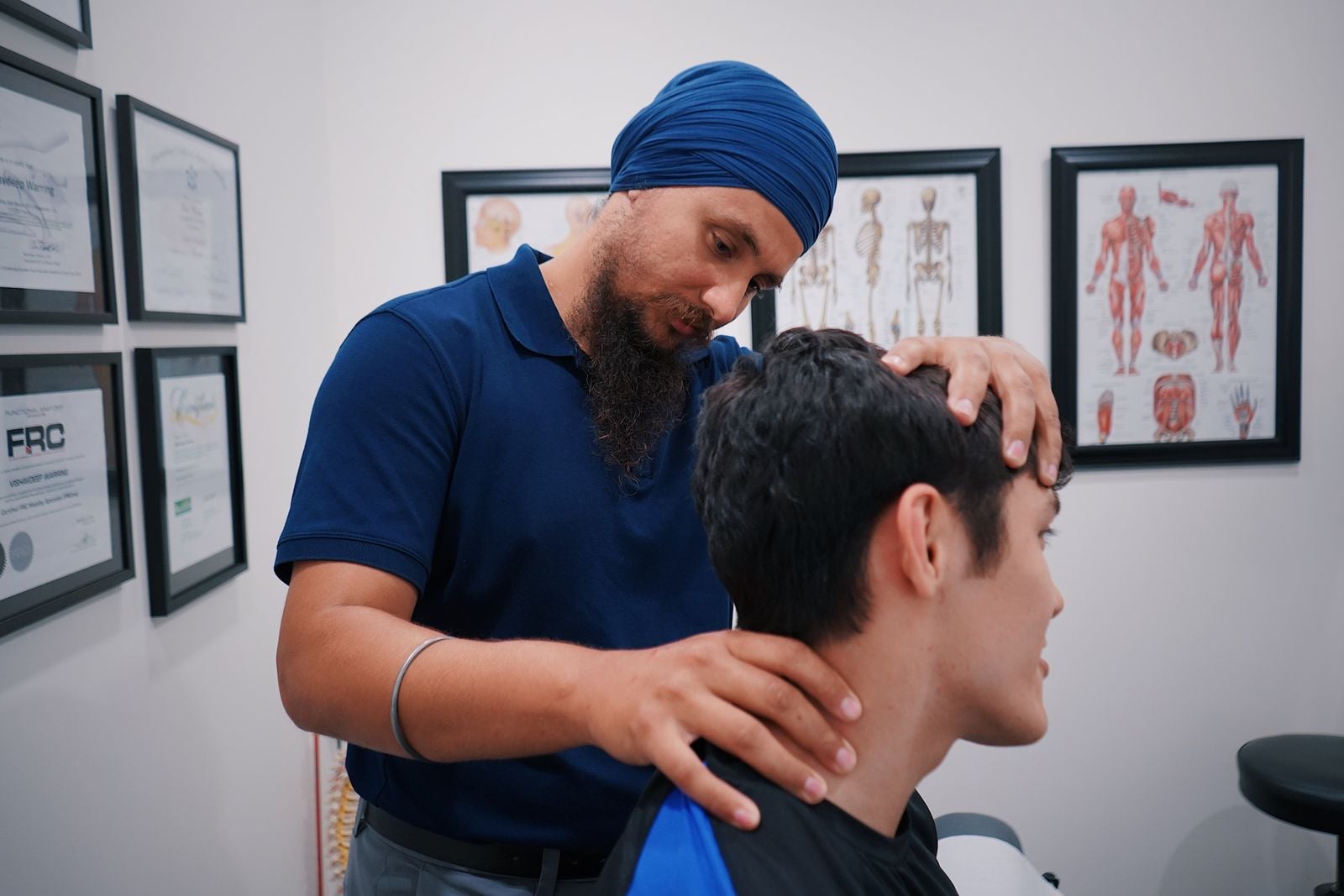
An evaluation looks at neck motion, joint mobility, muscle tension, and nerve function, and screens for signs that call for imaging or a referral. Based on the findings, a plan may include:
- Chiropractic adjustments or gentle mobilization to restore motion to stiff joints, when appropriate. See chiropractic and spinal corrective care.
- Soft tissue therapy such as Active Release Technique and myofascial release to ease muscle tension.
- Rehabilitation exercises to restore range of motion and strength. See physiotherapy and rehabilitation.
- Guidance on posture, sleep, and activity to support recovery day to day.
Research on whiplash generally supports active approaches, such as exercise and staying mobile, over prolonged rest. Hands-on care is usually combined with exercise rather than used alone.
Dr. Kowin Casey, DC, has owned and operated clinics that specialized in the rehabilitation of work and auto injuries, and KC Wellness and Physiotherapy offers auto injury diagnosis and treatment. Learn more about auto accident injuries.
What to Do After a Car Accident
The steps you take in the days after an accident can make a real difference:
- Get checked promptly: even if you feel fine, see a healthcare provider. Some injuries, including whiplash, have delayed symptoms. If you have severe symptoms, go to emergency care first.
- Document everything: take photos of the scene, note the time and circumstances, and keep records of all medical visits.
- Avoid prolonged immobilization: resting completely or wearing a neck collar for long periods can slow recovery. Follow your provider's guidance on movement and activity.
- Start care early: do not wait for pain to become severe before getting evaluated.
- Report every symptom: tell your provider about all symptoms, even ones that seem unrelated.
Why Waiting Is Not Worth It
Deciding to wait may seem harmless, but with whiplash, early attention generally helps. Pain can lead to guarded, limited movement, and the longer that pattern continues, the harder it can be to undo.
Beyond the physical toll, lingering neck pain can affect your ability to work, sleep, exercise, and enjoy time with the people you love. It can wear on your mood and sense of well-being.
The good news is that many whiplash injuries improve well with prompt, appropriate care and a gradual return to normal activity. If you have been in a car accident, do not assume that no pain right away means no injury. Whiplash is common and treatable, and getting evaluated early gives you the best chance of a smooth recovery.
At KC Wellness and Physiotherapy in Kansas City, Dr. Casey evaluates and treats auto accident injuries, including whiplash, with chiropractic care, soft tissue work, and rehabilitation. We accept all major insurance plans. Call our office at (913) 424-2410 to confirm your coverage before your visit. New patients can download the intake forms ahead of the first visit, or call our office at (913) 424-2410 with any questions.