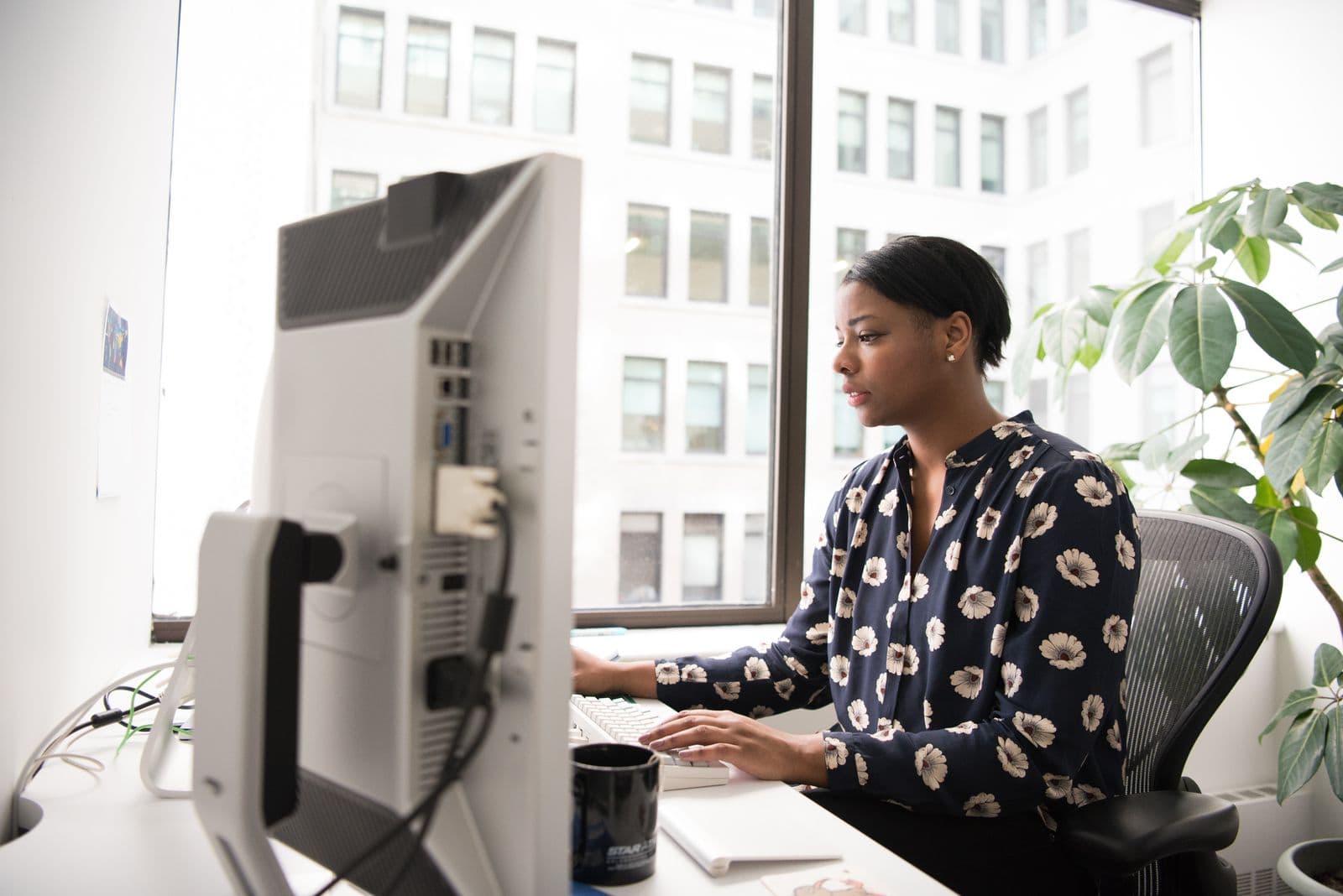
It often starts with a slight ache between your shoulder blades by mid-afternoon. By the end of the workday your neck is stiff, your lower back aches, and you cannot wait to stand up and stretch. If you spend your days at a desk, you are far from alone. Many office workers deal with pain that is closely tied to something we rarely think about: posture.
Our bodies are built to move, not to hold one position for hours. Technology has changed how we work, and for many people it has also brought daily neck and back discomfort. Understanding the connection is the first step toward relief, and small changes can make a real difference.
What Happens to Your Body at a Desk
At a computer, a few postural habits tend to appear together. Your head drifts forward toward the screen, which makes the muscles at the back of your neck work harder to hold it up. Your shoulders round forward as your arms reach for the keyboard. Your lower back loses its natural curve as you slump into the chair. Meanwhile, your hip flexors tighten and your glutes do very little.
Clinicians sometimes describe these patterns as upper crossed and lower crossed syndromes: some muscles become chronically tight while their opposites become weak and underused. Over time, these imbalances can affect how you feel even when you are away from your desk.
Where Poor Posture Hurts Most
Neck pain and headaches. A forward head position and sustained tension in the upper trapezius and the small muscles at the base of the skull are common contributors to neck pain and tension-type headaches. Many people describe a tight band around the head or a constant ache at the base of the skull.
Mid-back pain. The muscles between the shoulder blades can become fatigued working against tight chest muscles, which is why that area so often feels like it needs to be stretched or pressed.
Lower back pain. Slumped sitting flattens the lumbar curve and adds load to the discs, ligaments, and muscles that support the spine. Over time, this may contribute to lower back pain that lingers beyond working hours.
Why Posture Leads to Pain
Research has linked forward head posture with neck pain, and prolonged sitting with low back discomfort, although posture is rarely the only factor. Workplace changes that encourage better posture and more movement often help people feel better.
Part of the explanation is mechanical: sustained, uneven loading strains tissues. Part is neuromuscular: holding the same position changes the baseline tension in your muscles and the feedback your brain receives about where your body is, so a slumped position starts to feel normal. Breaking that cycle takes both awareness and strengthening.
A slumped posture can also make deep breathing feel harder, and many people notice they feel more tired and less focused after long stretches without moving.
Creating an Ergonomic Workspace
Your desk setup will not solve everything on its own, but good ergonomics removes many of the pressures that pull you into poor posture. For more detail, see desk ergonomics: simple adjustments to prevent pain.
- Monitor: place the top of the screen at or slightly below eye level, roughly an arm's length away, and directly in front of you so you do not twist your neck
- Chair: keep your feet flat on the floor with your knees roughly level with your hips, and use lumbar support to keep the natural curve of your lower back
- Keyboard and mouse: keep them close enough that your elbows stay near your sides with your shoulders relaxed and your wrists straight
- Lighting: reduce glare on your screen so you are not leaning forward and squinting
- Phone: use a headset or speaker for long calls instead of cradling the phone between your ear and shoulder
Movement and Posture Exercises
Even a perfect setup cannot make a static position healthy. Regular changes of position are one of the simplest ways to reduce stiffness and discomfort.
Set a reminder to stand, stretch, and move at regular intervals through the day. The breaks can be short. Beyond those breaks, strengthening the muscles that support good posture, such as the deep neck flexors, the muscles between the shoulder blades, the core, and the glutes, along with stretching the chest and hip flexors, helps address the imbalances desk work creates.
- Chin tucks: gently draw your chin straight back (not down) to bring your head over your shoulders, hold briefly, and repeat several times
- Shoulder blade squeezes: draw your shoulder blades back and down, hold briefly, and repeat several times
- Seated rotations: gently turn your upper body to each side to keep your mid-back moving
- Hip flexor stretch: step into a gentle lunge to stretch the front of the back hip, and hold for a comfortable stretch on each side
Stop any exercise that causes sharp pain, numbness, or tingling, and ask for guidance if you are unsure which exercises suit you.
When to Seek Professional Help
Workspace changes and regular movement help many people. Consider an evaluation if you have persistent neck pain, recurring headaches, ongoing mid-back or lower back pain, numbness or tingling in your arms or hands, or pain that reliably builds through the workday.
Care for posture-related pain often combines hands-on treatment with corrective exercise and habit changes. At KC Wellness and Physiotherapy, Dr. Kowin Casey, DC, provides chiropractic and spinal corrective care and physiotherapy and rehabilitation, and the practice's wellness model looks for the underlying causes of a problem rather than only the symptom. Read more about posture dysfunction.
Your desk job does not have to be a source of daily pain. With a better setup, regular movement, and support when you need it, you can feel better at work and after it. Call our office at (913) 424-2410 with any questions.