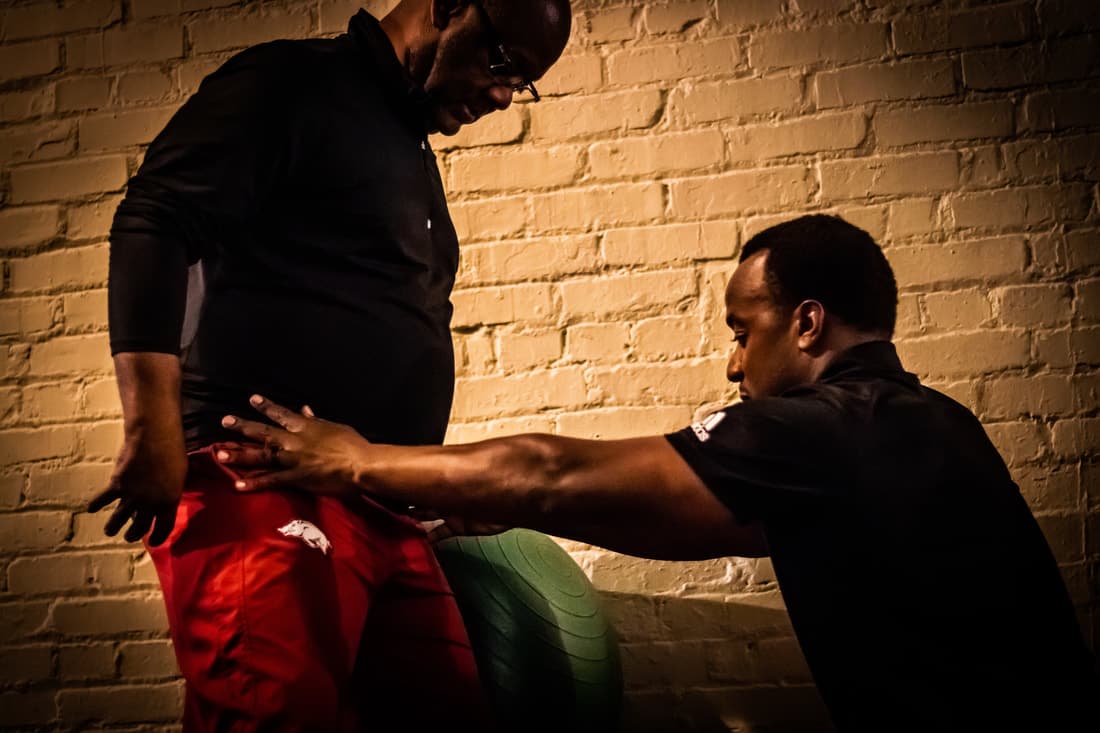
Whether it started while reaching for a high shelf, during a tennis serve, or through years of overhead work, shoulder pain from a rotator cuff injury can make daily life difficult. Many rotator cuff problems respond well to conservative care, and a structured trial of non-surgical treatment is often the first step before surgery is considered.
Understanding Rotator Cuff Injuries
The rotator cuff is a group of muscles and tendons that stabilize the shoulder joint and allow a wide range of arm movements. When these tendons become irritated, degenerate, or tear, whether from a sudden injury or gradual wear, the result is often pain, weakness, and difficulty with everyday tasks.
Rotator cuff injuries exist on a spectrum, from tendinopathy (irritation and overload of the tendon) to partial or complete tears. Symptoms do not always match what imaging shows. Some people with sizable tears have little pain, while others with minor changes struggle considerably. Read more about rotator cuff injuries and shoulder pain.
Who Is at Risk?
Rotator cuff injuries affect people of all ages and activity levels, though certain factors increase risk:
- Age: tendon tissue changes over time, so risk tends to rise from middle age onward
- Repetitive overhead activity: throwing and racquet athletes, painters, carpenters, and warehouse workers are more exposed
- Posture and shoulder mechanics: a forward head and rounded shoulders can change how the joint moves (see posture dysfunction)
- Previous shoulder injuries: past trauma can leave the shoulder more vulnerable
- Muscle imbalances: weak shoulder blade stabilizers or overworked compensating muscles
Why Conservative Care Is Often Tried First
Research comparing supervised exercise programs with surgery for some types of non-traumatic tears has found broadly similar results in the short term, which is one reason conservative care is so often recommended first. Results vary with the type and size of the tear, your age, and your activity goals.
Conservative care works by addressing the factors that keep the shoulder irritated: calming pain, restoring normal movement, strengthening the muscles that support the joint, and improving how the shoulder blade and arm move together. Addressing those factors can also lower the chance of the problem returning.
Components of Conservative Treatment
Hands-On Care
Hands-on treatment can help restore joint mobility and ease muscle tension around the shoulder. Options may include joint mobilization, chiropractic care for the neck and upper back, and soft tissue work such as active release technique and myofascial release. These approaches are usually most helpful when combined with exercise.
Therapeutic Exercise
A structured exercise program is the foundation of rotator cuff rehabilitation. It typically progresses through stages:
- Early stage: pendulum exercises, gentle range of motion, and pain management
- Middle stage: active range of motion, gentle isometric strengthening, and shoulder blade stabilization
- Later stage: progressive resistance training, functional movements, and sport or work-specific exercises
Supportive Therapies
Depending on your evaluation, supportive options may include kinesio taping for support without restricting motion, and laser therapy aimed at pain reduction. These are adjuncts to exercise, not replacements for it.
Posture, Ergonomics, and Activity Modification
Daily habits matter. Adjusting your workstation, taking breaks from repetitive overhead tasks, and finding a sleeping position that does not compress the painful shoulder can all help. Learning which movements to limit for a while, and how to return to them gradually, allows healing while you stay as active as possible.
Timeline and Expectations
Recovery from a rotator cuff injury usually takes weeks to months of consistent work, and full recovery can take longer. Many people notice pain easing before strength fully returns.
Progress is rarely a straight line. Good days and setbacks are normal and do not mean treatment has failed. Regular check-ins allow your plan to be adjusted as you improve.
When to Consider a Surgical Opinion
Conservative care is not right for every shoulder. A referral for an orthopedic opinion may be appropriate for:
- A sudden, traumatic tear, especially in a younger, active person
- Significant weakness or loss of function, such as being unable to lift the arm
- Pain and limitation that persist after a reasonable trial of conservative care
- Large tears at risk of getting worse
If imaging is needed to clarify the injury, it may be recommended or referred. And if surgery does become necessary, building strength and mobility beforehand can support recovery afterward. See post-surgical rehabilitation for more.
Taking the First Step Toward Recovery
If you have shoulder pain, weakness, or limited motion, a thorough evaluation can clarify the likely cause and guide a plan that fits your goals.
At KC Wellness and Physiotherapy, Dr. Kowin Casey, DC, combines physiotherapy and rehabilitation with chiropractic and spinal corrective care and soft tissue work, with the aim of helping you return to the activities you enjoy. Call our office at (913) 424-2410 with any questions.